

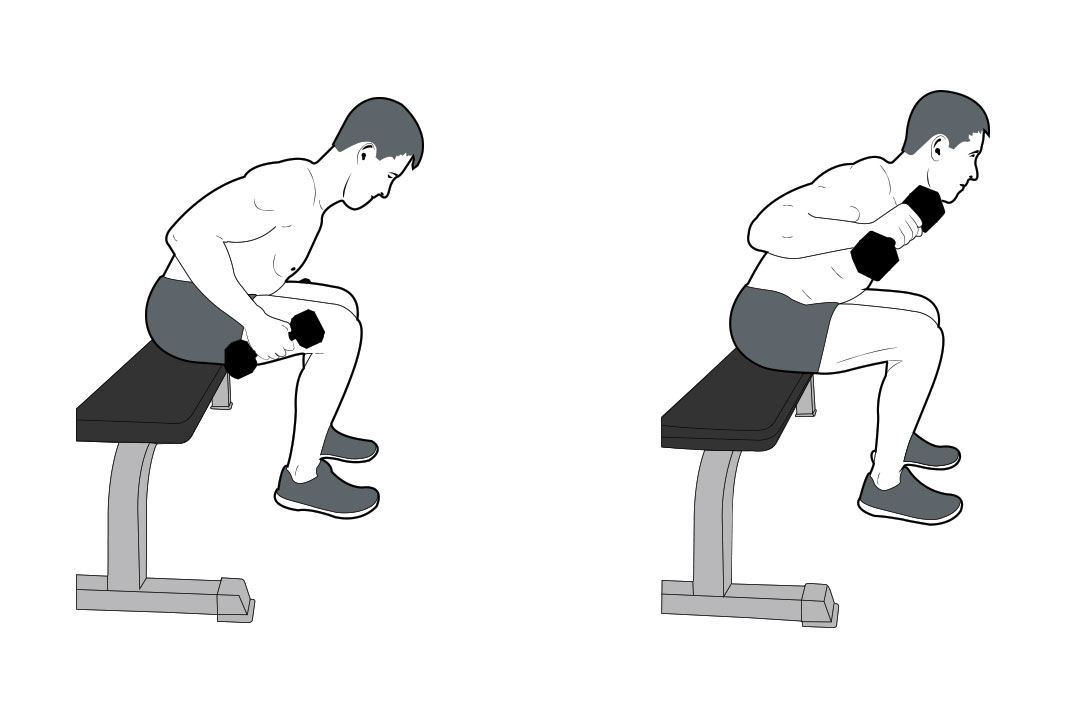
The preacher curl is an exercise that gained popularity from Mr Olympia competitor Larry Scott and has often been in the program for many a body builder since then. It is a great exercise to help improve strength and size of the bicep. The important point of this exercise is that you must control the descent of the weight otherwise you run the risk of causing injury. Time under tension is key!
To mix up the stimulus of this exercise, you can perform this exercise using a low pulley instead of a dumbbell. In this case you will need to position the bench in front of a cable machine or pulley based piece of equipment.

Want to really target the shoulders – this exercise is a great way to isolate those deltoids!

As stability and strength improves add a DB to one hand.

The Dumbbell Seated Calf Raise is a clever alternative for those who do not have a machine based seated calf raise machine. In some ways this set up is actually better than a machine, mainly due to the knees being more free and the sensation of trying to lift your heels up and forward is slightly more effective!

Dumbbell Press is a great exercise to progress to from doing your standard barbell bench press. It forces your muscles to work harder to stabilise the movement and means you get more engagement in your shoulder joints.

Lateral raises are easy in that you don’t need much weight but challenging because they are hard work! A lot of people go too heavy with these and sacrifice form for feeding their ego. Let’s not be one of those people eh? 😀
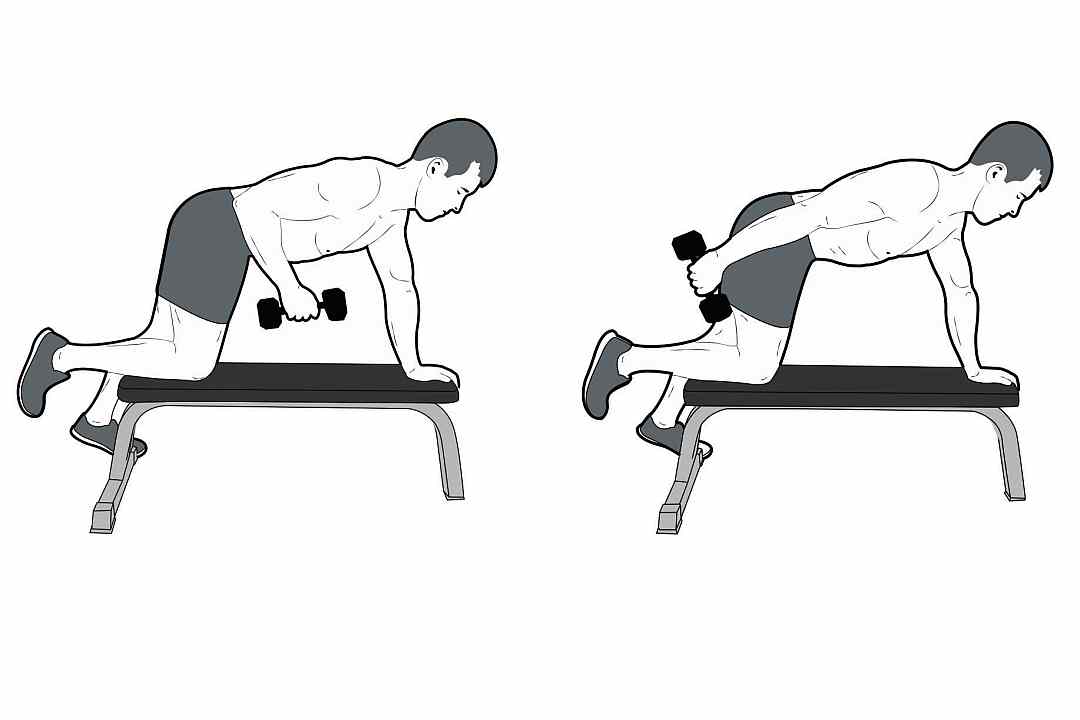
No actual legs involved in this exercise but it is a great one to finish off a session! This exercise isolates the Triceps at the back of your arms but it also has a secret lesson of holding your shoulder in the correct positioning to help with your posture. 2 for the price of some burny arms!
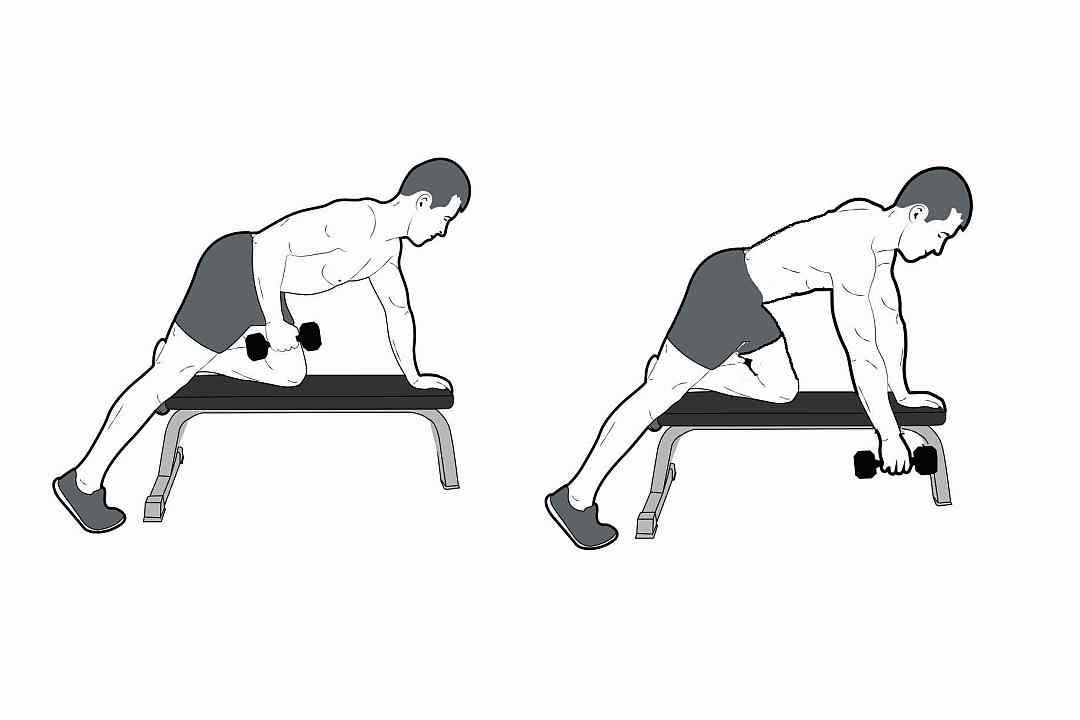
The one arm row is such a great staple of the weights room and it is important that we get it right! Too many people reef the weight too high and they also pull the weight close to their chest which actually engages your internal rotators and chest muscles which isn’t right!
Ensure your back is in neutral with no skewing to the side.
Also ensure that you pull the weight to the top of your hip bone!

Pos Delt Tris stands for Posterior Deltoid and Triceps. This double movement allows us to engage some lesser used posterior deltoid and also the tricep!
The trick to getting this one right is not allowing your elbow to go to high and above your torso. Keep it in line with your back and you will engage more!
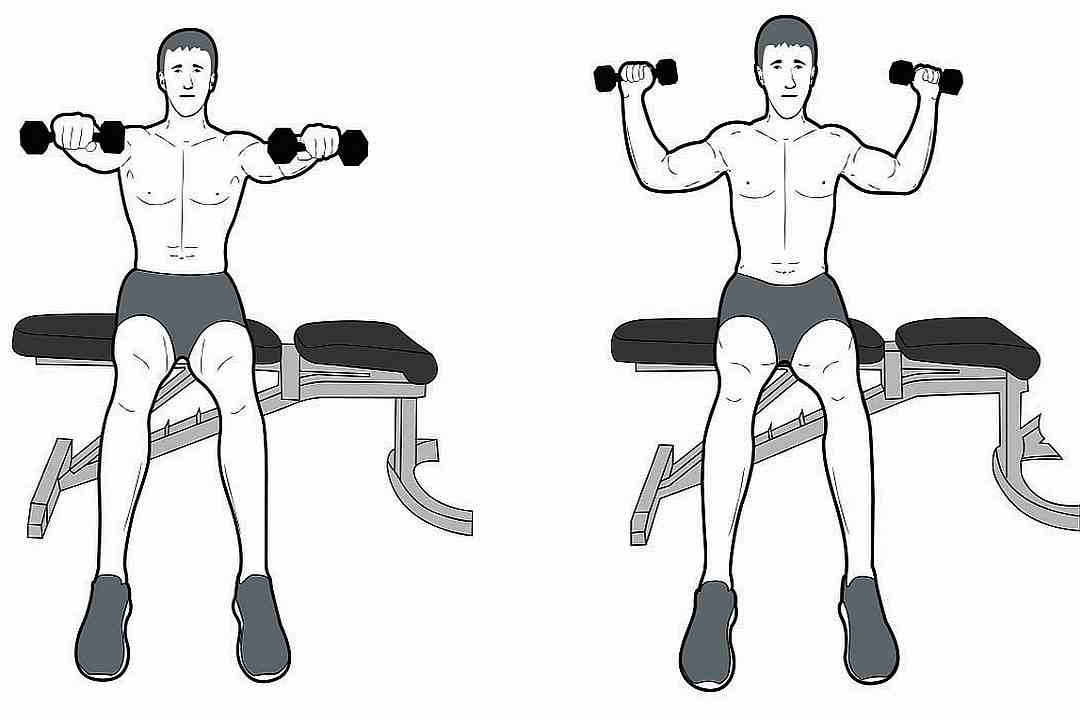
This exercise is deceptively challenging! You don’t need a lot of weight at all to complete it. Even a can of food in each hand will be enough for most people! If you have a theraband, you can loop it around a post and do the motion with it also.
If your traps really start to engage with this exercise, stop the exercise as the muscles we want to use have been fatigued and other muscles are taking over.
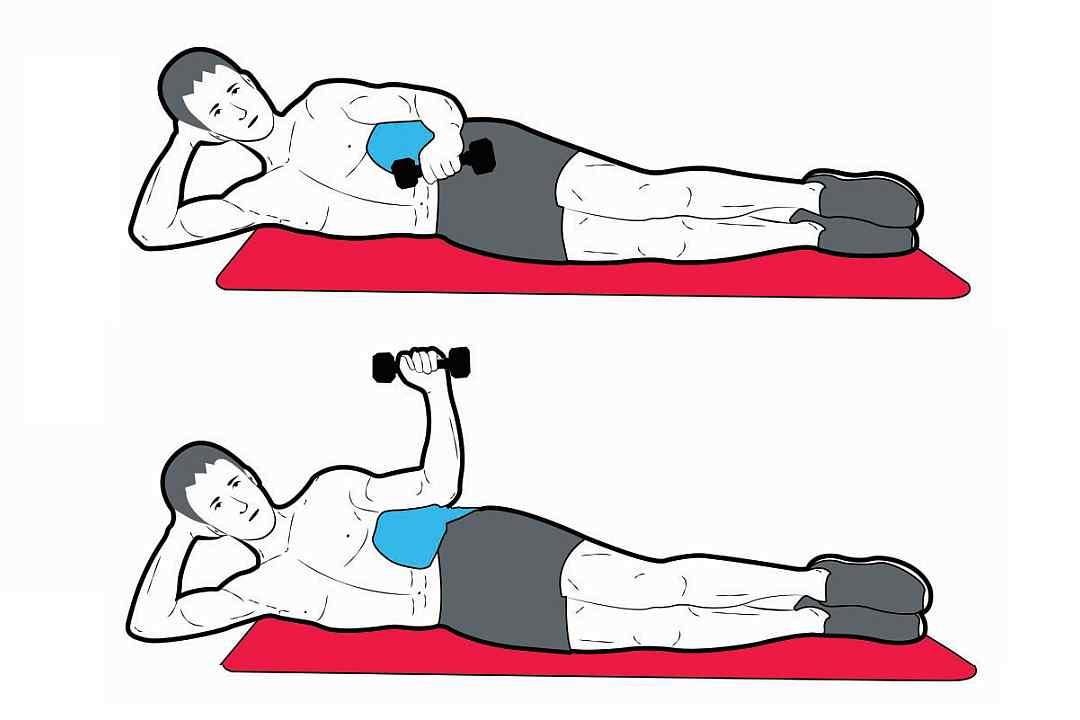
Such a simple exercise in movement and also just being able to do it. A 1kg dumbbell is often all that is needed. You can can even do this exercise with a can of beans if you wanted!
The key to this one is to make sure your movements are slow and smooth, otherwise other muscles will try and jump in and do the work!
This is a simple yet effective exercise that helps with learning and improving external rotation. The key to this exercise is not going heavy. Your external rotator muscles aren’t big so they don’t require big weights being thrown around. Light yet precise movements are key for this.
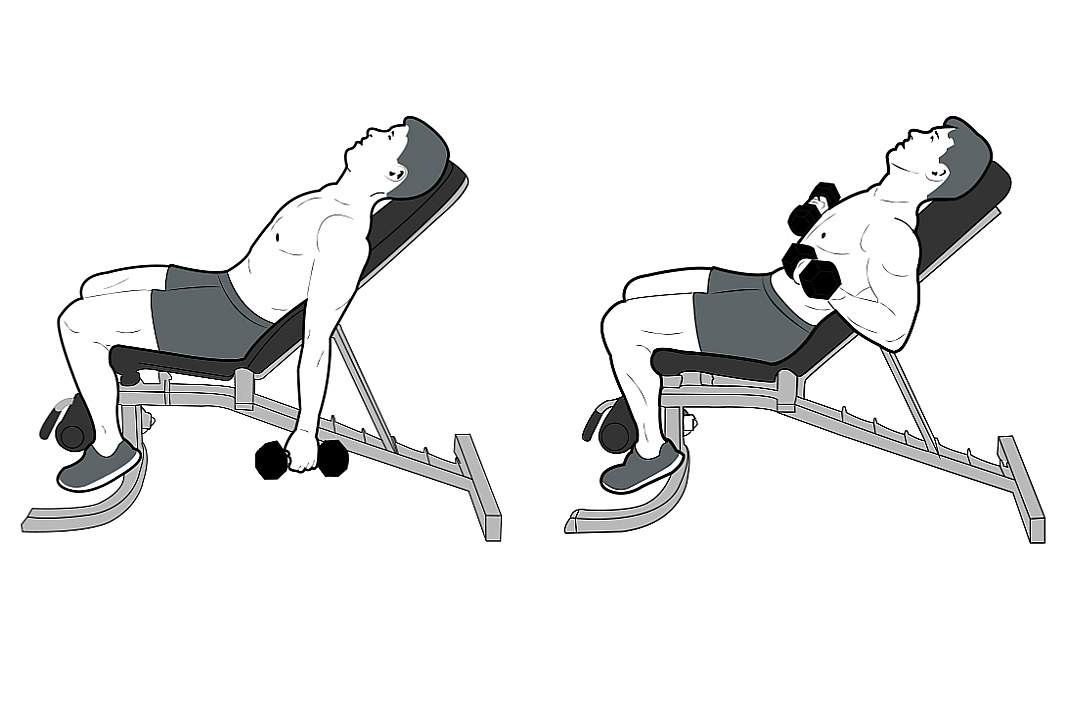
Incline Curls are a great variation to the good old bicep curls. Due to laying on the incline bench, it means the angle of the shoulder to elbow still vertical but your torso now is at a different angle and it actually creates a stretch in the bicep. I also find this exercise to be great as it really shows if someone is ‘cheating’ with their curl. If you forearm ends up being vertical, it means you have shifted your elbows from their starting point. The only part of the arm that should stay vertical is your humerus bone (upper arm where you bicep is!).